Explorar lo mejor de la poesía inglesa puede ser una tarea abrumadora, dada su rica y diversa historia. Esta lista se centra en la brevedad y el impacto, presentando 10 poemas excepcionales de 50 líneas o menos, escritos originalmente en inglés. Desde clásicos atemporales hasta obras maestras modernas, estos poemas ofrecen profundas reflexiones sobre la condición humana, demostrando el poder del lenguaje para evocar emociones e inspirar la reflexión. Esta selección, aunque subjetiva, busca representar las diversas voces y temas que han dado forma a la poesía inglesa. Te invitamos a explorar estas obras y descubrir la belleza perdurable dentro de sus formas concisas.
Two roads diverged in a yellow wood,
And sorry I could not travel both
And be one traveler, long I stood
And looked down one as far as I could
To where it bent in the undergrowth;

Then took the other, as just as fair,
And having perhaps the better claim,
Because it was grassy and wanted wear;
Though as for that the passing there
Had worn them really about the same,

And both that morning equally lay
In leaves no step had trodden black.
Oh, I kept the first for another day!
Yet knowing how way leads on to way,
I doubted if I should ever come back.

I shall be telling this with a sigh
Somewhere ages and ages hence:
Two roads diverged in a wood, and I—
I took the one less traveled by,
And that has made all the difference.
Retrato de Robert Frost en sus últimos años
El icónico poema de Frost explora el concepto de la elección y su potencial impacto en la vida. Aunque aparentemente sencillo, la ambigüedad del poema invita a una interpretación más profunda, cuestionando si el camino elegido realmente marcó una diferencia o si la narrativa es una construcción retrospectiva de significado.
9. “The New Colossus” por Emma Lazarus
Not like the brazen giant of Greek fame,
With conquering limbs astride from land to land;
Here at our sea-washed, sunset gates shall stand
A mighty woman with a torch, whose flame
Is the imprisoned lightning, and her name
Mother of Exiles. From her beacon-hand
Glows world-wide welcome; her mild eyes command
The air-bridged harbor that twin cities frame.
“Keep, ancient lands, your storied pomp!” cries she
With silent lips. “Give me your tired, your poor,
Your huddled masses yearning to breathe free,
The wretched refuse of your teeming shore.
Send these, the homeless, tempest-tossed to me,
I lift my lamp beside the golden door!”
El soneto de Lazarus, inscrito en la Estatua de la Libertad, encapsula el ideal estadounidense de acoger a los inmigrantes que buscan refugio y oportunidad. Contrasta el simbolismo antiguo de la conquista con un mensaje de compasión y esperanza, consolidando la estatua como un faro de libertad.
I met a traveller from an antique land
Who said: “Two vast and trunkless legs of stone
Stand in the desert. Near them, on the sand,
Half sunk, a shattered visage lies, whose frown,
And wrinkled lip, and sneer of cold command,
Tell that its sculptor well those passions read
Which yet survive, stamped on these lifeless things,
The hand that mocked them and the heart that fed:
And on the pedestal these words appear:
‘My name is Ozymandias, king of kings:
Look on my works, ye Mighty, and despair!’
Nothing beside remains. Round the decay
Of that colossal wreck, boundless and bare
The lone and level sands stretch far away.”
Retrato de Percy Bysshe Shelley
El poderoso poema de Shelley reflexiona sobre la naturaleza efímera del poder y la inevitable decadencia incluso de los monumentos más grandiosos. La ironía de la inscripción jactanciosa de Ozymandias en medio de las ruinas sirve como un potente recordatorio de la fuerza destructiva del tiempo.
7. “Ode on a Grecian Urn” por John Keats
La oda de Keats celebra el poder perdurable del arte para trascender el tiempo y la mortalidad. El poema explora la tensión entre la perfección estática de las figuras de la urna y la naturaleza dinámica y fugaz de la vida humana, sugiriendo en última instancia que la belleza y la verdad están entrelazadas. Vea el dibujo original a continuación:
El evocador poema de Blake cuestiona la naturaleza de la creación y la coexistencia del bien y el mal. El tigre, un símbolo tanto de belleza como de ferocidad, plantea profundas preguntas sobre la mano divina que pudo crear tal criatura, desafiando las nociones convencionales de un creador benevolente.
Retrato de William Blake
5. “On His Blindness” por John Milton
El soneto de Milton aborda los desafíos de la limitación física y la búsqueda de un propósito ante la adversidad. El poema explora la lucha del poeta con su ceguera, encontrando finalmente consuelo en la creencia de que el verdadero servicio reside en aceptar el propio destino y esperar pacientemente la voluntad de Dios.
4. “A Psalm of Life” por Henry Wadsworth Longfellow
El edificante poema de Longfellow fomenta la acción, la perseverancia y la búsqueda de una vida significativa. Rechaza la aceptación pasiva del destino, instando a los lectores a abrazar el presente y luchar por la grandeza, dejando un impacto positivo en el mundo.
El lírico poema de Wordsworth celebra la belleza simple de la naturaleza y su capacidad para inspirar alegría y consuelo. La imagen de los narcisos danzantes se convierte en una fuente de felicidad duradera para el poeta, destacando el poder restaurador del mundo natural.
William Wordsworth a los 28 años
2. “Holy Sonnet 10: Death, Be Not Proud” por John Donne
El desafiante soneto de Donne reta al poder de la muerte, argumentando que es simplemente un sueño temporal antes de la vida eterna. El tono audaz y la imaginería vívida del poema disminuyen el poder percibido de la muerte, ofreciendo consuelo y esperanza ante la mortalidad.
El icónico soneto de Shakespeare celebra el poder perdurable del amor y la poesía para inmortalizar la belleza. Comparando a su amada con un día de verano, el poeta argumenta que su belleza nunca se desvanecerá, preservada para siempre dentro de las líneas eternas de su verso.
¿Qué define a un gran poema? Esta lista explora diez poemas excepcionales, originalmente escritos en inglés y de menos de 50 líneas, que ofrecen un vistazo al poder y la belleza de la expresión poética. Desde conmovedoras reflexiones sobre las decisiones de la vida hasta meditaciones atemporales sobre el arte, la naturaleza y la mortalidad, estas obras cuidadosamente seleccionadas resuenan con los lectores a través de generaciones. Únete a nosotros mientras nos adentramos en sus profundidades, descubriendo las cualidades únicas que las convierten en obras maestras perdurables. Si bien existen innumerables poemas notables, estos diez ofrecen un punto de partida para apreciar el arte y la profundidad emocional de la poesía. ¡Comparte tus favoritos en los comentarios!
Two roads diverged in a yellow wood,
And sorry I could not travel both
And be one traveler, long I stood
And looked down one as far as I could
To where it bent in the undergrowth;

Then took the other, as just as fair,
And having perhaps the better claim,
Because it was grassy and wanted wear;
Though as for that the passing there
Had worn them really about the same,

And both that morning equally lay
In leaves no step had trodden black.
Oh, I kept the first for another day!
Yet knowing how way leads on to way,
I doubted if I should ever come back.

I shall be telling this with a sigh
Somewhere ages and ages hence:
Two roads diverged in a wood, and I—
I took the one less traveled by,
And that has made all the difference.
Robert Frost
Este icónico poema explora la importancia de las decisiones. Mientras el narrador afirma haber tomado el “camino menos transitado”, una mirada más cercana revela que ambos caminos estaban igualmente desgastados. El poema destaca cómo nuestras narrativas moldean nuestra percepción de las elecciones, sugiriendo que el significado a menudo se construye retrospectivamente. Frost desafía sutilmente el individualismo tradicional, planteando preguntas sobre el verdadero impacto de nuestras decisiones. En última instancia, el poema celebra el deseo humano de marcar la diferencia, incluso si el impacto es menos claro de lo que imaginamos.
9. “El Nuevo Coloso” de Emma Lazarus
Not like the brazen giant of Greek fame,
With conquering limbs astride from land to land;
Here at our sea-washed, sunset gates shall stand
A mighty woman with a torch, whose flame
Is the imprisoned lightning, and her name
Mother of Exiles. From her beacon-hand
Glows world-wide welcome; her mild eyes command
The air-bridged harbor that twin cities frame.
“Keep, ancient lands, your storied pomp!” cries she
With silent lips. “Give me your tired, your poor,
Your huddled masses yearning to breathe free,
The wretched refuse of your teeming shore.
Send these, the homeless, tempest-tossed to me,
I lift my lamp beside the golden door!”
Inscrito en la Estatua de la Libertad, este soneto conecta la identidad de Estados Unidos con el mundo antiguo, simbolizado por el Coloso de Rodas. Lazarus retrata a Estados Unidos como un faro de esperanza para los cansados y oprimidos del mundo, destacando su carácter compasivo. El poder perdurable del poema reside en su articulación de un ideal estadounidense central: ofrecer oportunidades y refugio a quienes buscan una vida mejor. Este mensaje continúa resonando, generando diálogo sobre la inmigración y la identidad nacional.
I met a traveler from an antique land
Who said: “Two vast and trunkless legs of stone
Stand in the desert . . . Near them, on the sand,
Half sunk, a shattered visage lies, whose frown,
And wrinkled lip, and sneer of cold command,
Tell that its sculptor well those passions read
Which yet survive, stamped on these lifeless things,
The hand that mocked them, and the heart that fed:
And on the pedestal these words appear:
‘My name is Ozymandias, king of kings:
Look on my works, ye Mighty, and despair!’
Nothing beside remains. Round the decay
Of that colossal wreck, boundless and bare
The lone and level sands stretch far away.”
Percy Bysshe Shelley
El soneto de Shelley describe la estatua en ruinas de un poderoso faraón, destacando la naturaleza efímera del poder y la ambición. La inscripción, “¡Contemplad mis obras, poderosos, y desesperad!”, se vuelve irónica, yuxtapuesta con la desolación circundante. La imagen de la grandeza en decadencia evoca el inevitable paso del tiempo y la insignificancia final de los logros mundanos. El enfoque del poema en la antigua civilización egipcia, conocida por su arquitectura monumental pero finalmente perdida en el tiempo, enfatiza aún más este tema.
7. “Oda a una Urna Griega” de John Keats
Thou still unravish'd bride of quietness,
Thou foster-child of silence and slow time,
Sylvan historian, who canst thus express
A flowery tale more sweetly than our rhyme:
What leaf-fring'd legend haunts about thy shape
Of deities or mortals, or of both,
In Tempe or the dales of Arcady?
What men or gods are these? What maidens loth?
What mad pursuit? What struggle to escape?
What pipes and timbrels? What wild ecstasy?

Heard melodies are sweet, but those unheard
Are sweeter; therefore, ye soft pipes, play on;
Not to the sensual ear, but, more endear'd,
Pipe to the spirit ditties of no tone:
Fair youth, beneath the trees, thou canst not leave
Thy song, nor ever can those trees be bare;
Bold Lover, never, never canst thou kiss,
Though winning near the goal yet, do not grieve;
She cannot fade, though thou hast not thy bliss,
For ever wilt thou love, and she be fair!

Ah, happy, happy boughs! that cannot shed
Your leaves, nor ever bid the Spring adieu;
And, happy melodist, unwearied,
For ever piping songs for ever new;
More happy love! more happy, happy love!
For ever warm and still to be enjoy'd,
For ever panting, and for ever young;
All breathing human passion far above,
That leaves a heart high-sorrowful and cloy'd,
A burning forehead, and a parching tongue.

Who are these coming to the sacrifice?
To what green altar, O mysterious priest,
Lead'st thou that heifer lowing at the skies,
And all her silken flanks with garlands drest?
What little town by river or sea shore,
Or mountain-built with peaceful citadel,
Is emptied of this folk, this pious morn?
And, little town, thy streets for evermore
Will silent be; and not a soul to tell
Why thou art desolate, can e'er return.


O Attic shape! Fair attitude! with brede
Of marble men and maidens overwrought,
With forest branches and the trodden weed;
Thou, silent form, dost tease us out of thought
As doth eternity: Cold Pastoral!
When old age shall this generation waste,
Thou shalt remain, in midst of other woe
Than ours, a friend to man, to whom thou say'st,
“Beauty is truth, truth beauty,—that is all
Ye know on earth, and all ye need to know.”
La oda de Keats explora el poder del arte para trascender el tiempo. La urna griega, adornada con escenas de música, amor y rituales, se convierte en un símbolo de belleza eterna. Keats contrasta la naturaleza fugaz de la experiencia humana con la permanencia del arte, sugiriendo que el arte ofrece una visión de un reino más allá de la mortalidad. Los versos famosos, “La belleza es verdad, la verdad belleza, eso es todo / Lo que saben en la tierra, y todo lo que necesitan saber”, encapsulan el mensaje central del poema.
6. “El Tigre” de William Blake
Tyger Tyger, burning bright,
In the forests of the night;
What immortal hand or eye,
Could frame thy fearful symmetry?

In what distant deeps or skies.
Burnt the fire of thine eyes?
On what wings dare he aspire?
What the hand, dare seize the fire?

And what shoulder, and what art,
Could twist the sinews of thy heart?
And when thy heart began to beat,
What dread hand? and what dread feet?

What the hammer? what the chain,
In what furnace was thy brain?
What the anvil? what dread grasp,
Dare its deadly terrors clasp!

When the stars threw down their spears
And water’d heaven with their tears:
Did he smile his work to see?
Did he who made the Lamb make thee?

Tyger Tyger burning bright,
In the forests of the night:
What immortal hand or eye,
Dare frame thy fearful symmetry?
William Blake
El poema de Blake confronta el problema del mal en un mundo creado por un Dios benevolente. El tigre, símbolo de poder y ferocidad, representa la existencia de la oscuridad y el sufrimiento. A través de una serie de preguntas retóricas, Blake explora la naturaleza de la creación y el misterio de por qué un Dios amoroso permitiría que existiera tal criatura. Las vívidas imágenes y la intensidad rítmica del poema crean una sensación de asombro y maravilla, lo que lleva a la reflexión sobre las complejidades del universo.
When I consider how my light is spent
Ere half my days in this dark world and wide,
And that one talent which is death to hide
Lodg’d with me useless, though my soul more bent
To serve therewith my Maker, and present
My true account, lest he returning chide,
“Doth God exact day-labour, light denied?”
I fondly ask. But Patience, to prevent
That murmur, soon replies: “God doth not need
Either man’s work or his own gifts: who best
Bear his mild yoke, they serve him best. His state
Is kingly; thousands at his bidding speed
And post o’er land and ocean without rest:
They also serve who only stand and wait.”
John Milton
El soneto de Milton reflexiona sobre su experiencia con la ceguera, lidiando con sentimientos de pérdida y la incapacidad de desarrollar todo su potencial. Enmarca su ceguera como un desafío a su servicio a Dios, cuestionando si sus habilidades disminuidas lo vuelven inútil. A través de la figura personificada de la Paciencia, Milton encuentra consuelo en la idea de que el verdadero servicio radica en aceptar la voluntad de Dios, incluso frente a la adversidad. El poema ofrece un poderoso mensaje sobre cómo encontrar propósito y significado en medio de las limitaciones de la vida.
4. “Un Salmo de Vida” de Henry Wadsworth Longfellow
Tell me not, in mournful numbers,
Life is but an empty dream!
For the soul is dead that slumbers,
And things are not what they seem.

Life is real! Life is earnest!
And the grave is not its goal;
Dust thou art, to dust returnest,
Was not spoken of the soul.

Not enjoyment, and not sorrow,
Is our destined end or way;
But to act, that each to-morrow
Find us farther than to-day.

Art is long, and Time is fleeting,
And our hearts, though stout and brave,
Still, like muffled drums, are beating
Funeral marches to the grave.

In the world’s broad field of battle,
In the bivouac of Life,
Be not like dumb, driven cattle!
Be a hero in the strife!

Trust no Future, howe’er pleasant!
Let the dead Past bury its dead!
Act,—act in the living Present!
Heart within, and God o’erhead!

Lives of great men all remind us
We can make our lives sublime,
And, departing, leave behind us
Footprints on the sands of time;

Footprints, that perhaps another,
Sailing o’er life’s solemn main,
A forlorn and shipwrecked brother,
Seeing, shall take heart again.


Let us, then, be up and doing,
With a heart for any fate;
Still achieving, still pursuing,
Learn to labor and to wait.
El poema de Longfellow es un llamado a la acción, que insta a los lectores a abrazar los desafíos de la vida y luchar por la grandeza. Rechaza una aceptación pasiva del destino, enfatizando la importancia de vivir plenamente en el presente. El poema defiende el poder de la acción individual y el potencial de dejar una huella positiva en el mundo. La imagen de “huellas en las arenas del tiempo” sugiere que nuestras acciones pueden inspirar y alentar a otros, incluso después de que nos hayamos ido. El tono emocional del poema resuena con los lectores que buscan inspiración y motivación.
3. “Vagaba Solitario como una Nube” (Narcisos) de William Wordsworth
I wandered lonely as a cloud
That floats on high o’er vales and hills,
When all at once I saw a crowd,
A host, of golden daffodils;
Beside the lake, beneath the trees,
Fluttering and dancing in the breeze.

Continuous as the stars that shine
And twinkle on the milky way,
They stretched in never-ending line
Along the margin of a bay:
Ten thousand saw I at a glance,
Tossing their heads in sprightly dance.

The waves beside them danced; but they
Out-did the sparkling waves in glee:
A poet could not but be gay,
In such a jocund company:
I gazed—and gazed—but little thought
What wealth the show to me had brought:

For oft, when on my couch I lie
In vacant or in pensive mood,
They flash upon that inward eye
Which is the bliss of solitude;
And then my heart with pleasure fills,
And dances with the daffodils.
William Wordsworth
El poema de Wordsworth celebra el poder restaurador de la naturaleza. Los narcisos, personificados como bailarines y alegres, ofrecen al narrador solitario una sensación de conexión y alegría. El poema sugiere que la naturaleza puede proporcionar consuelo e inspiración, incluso en momentos de soledad. La imagen perdurable de los narcisos “brillando en ese ojo interior” destaca el impacto duradero de experimentar la belleza natural.
2. “Soneto Sagrado 10: Muerte, No Seas Orgullosa” de John Donne
Death, be not proud, though some have called thee
Mighty and dreadful, for thou art not so;
For those whom thou think’st thou dost overthrow
Die not, poor Death, nor yet canst thou kill me.
From rest and sleep, which but thy pictures be,
Much pleasure; then from thee much more must flow,
And soonest our best men with thee do go,
Rest of their bones, and soul’s delivery.
Thou art slave to fate, chance, kings, and desperate men,
And dost with poison, war, and sickness dwell,
And poppy or charms can make us sleep as well
And better than thy stroke; why swell’st thou then?
One short sleep past, we wake eternally
And death shall be no more; Death, thou shalt die.
El soneto de Donne confronta a la muerte con desafío e ingenio. Desafía el poder de la muerte, argumentando que es simplemente una transición a la vida eterna. Los argumentos intelectuales y espirituales del poema ofrecen consuelo y esperanza frente a la mortalidad. El tono audaz y el inteligente juego de palabras de Donne disminuyen la imagen temible de la muerte, transformándola en un sueño temporal antes del despertar eterno. El poderoso mensaje de este soneto resuena con los lectores que buscan consuelo y comprensión frente a la pérdida.
1. “Soneto 18: ¿Te Compararé con un Día de Verano?” de William Shakespeare
Shall I compare thee to a summer’s day?
Thou art more lovely and more temperate:
Rough winds do shake the darling buds of May,
And summer’s lease hath all too short a date:
Sometime too hot the eye of heaven shines,
And often is his gold complexion dimm’d;
And every fair from fair sometime declines,
By chance, or nature’s changing course, untrimm’d;
But thy eternal summer shall not fade
Nor lose possession of that fair thou ow’st;
Nor shall Death brag thou wander’st in his shade,
When in eternal lines to time thou grow’st;
So long as men can breathe or eyes can see,
So long lives this, and this gives life to thee.
William Shakespeare
El soneto de Shakespeare celebra el poder de la poesía para inmortalizar la belleza. El hablante compara al sujeto del poema con un día de verano, declarando finalmente que la belleza del sujeto supera la naturaleza fugaz de la estación. El poder perdurable del poema reside en su afirmación de que el arte puede trascender el tiempo y la mortalidad. El pareado final afirma que mientras exista gente para leer el poema, la belleza del sujeto perdurará. Este tema atemporal resuena con los lectores, recordándonos el poder perdurable del arte.

 Retrato de Robert Frost en sus últimos años
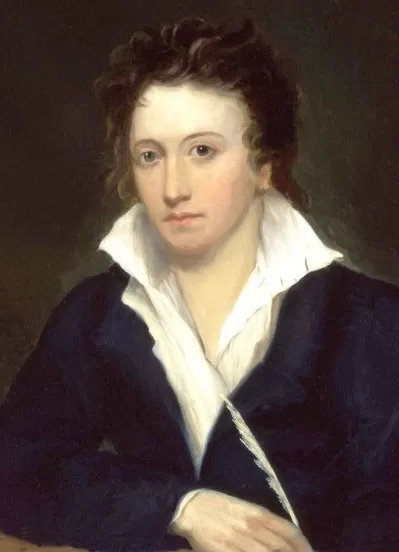 Retrato de Percy Bysshe Shelley
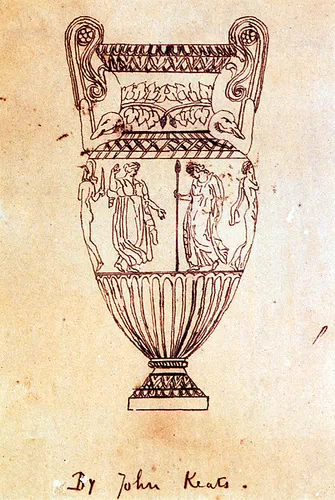 Dibujo de Keats de una urna griega
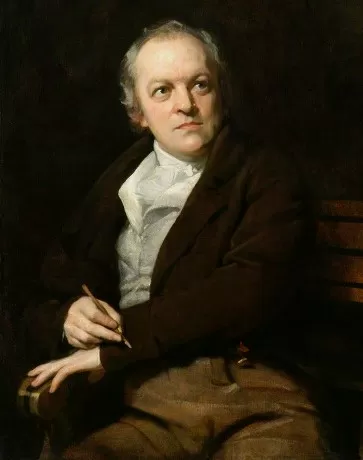 Retrato de William Blake
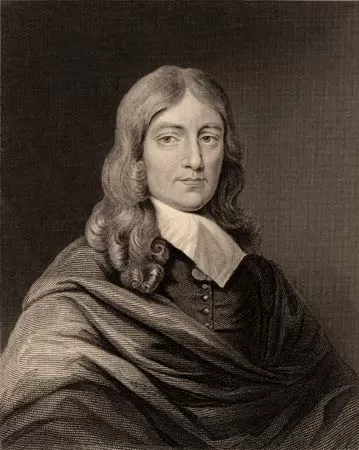 Retrato de John Milton
 Página del manuscrito de A Psalm of Life
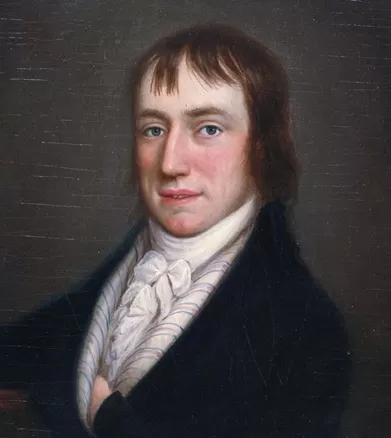 William Wordsworth a los 28 años


