
Chinese poetry, renowned for its brevity and depth, offers a unique window into Chinese culture and language. Exploring famous Chinese poems, from poignant farewells to timeless expressions of love, provides a rich learning experience and a connection to centuries of artistic expression. This journey through famous Chinese poems explores beloved classics, offering both the original text and English translations, along with insightful commentary.
Contents
- Childhood Classics: Poems Every Chinese Child Knows
- 静夜思 (Thoughts in the Silent Night) by Li Bai
- 悯农 (Toiling Farmers) by Li Shen
- 咏鹅 (An Ode to the Goose) by Luo Binwang
- The Pain of Parting: Famous Chinese Farewell Poems
- 送杜少府之任蜀州 (Farewell To Vice-Prefect Du Setting Out For His Official Post In Shu) by Wang Bo
- 送友人 (Farewell to A Friend) by Li Bai
- Expressions of the Heart: Famous Chinese Love Poems
- 江城子 (Song of River City) by Su Shi
 famous chinese poems
Childhood Classics: Poems Every Chinese Child Knows
Certain famous Chinese poems are etched into the memory of every Chinese schoolchild. These poems, many originating from the Tang Dynasty (618-907), a golden age of Chinese literature, are more than just verses; they are cultural touchstones.
静夜思 (Thoughts in the Silent Night) by Li Bai
床前明月光,
疑是地上霜。
举头望明月,
低头思故乡。
TRANSLATION
Moonlight before my bed,
I suspect it is frost on the ground.
I raise my head to gaze at the bright moon,
I lower my head and think of my hometown.
Li Bai (701-762), a giant of Tang Dynasty poetry, captures the universal feeling of homesickness with elegant simplicity in this famous Chinese poem. The image of the moon, a recurring motif in Chinese poetry, evokes a sense of longing and tranquility.
悯农 (Toiling Farmers) by Li Shen
锄禾日当午,
汗滴禾下土。
谁知盘中餐,
粒粒皆辛苦。
TRANSLATION
Farmers weeding at noon,
Sweat dripping down to the soil below.
Who knows that every grain of rice in the bowl,
Is the fruit of hard labor?
This poem, often recited by children, instills a respect for hard work and the value of food. Li Shen’s vivid imagery brings the farmer’s toil to life, reminding us of the effort behind every meal.
咏鹅 (An Ode to the Goose) by Luo Binwang
鹅、鹅、鹅,
曲项向天歌。
白毛浮绿水,
红掌拨清波。
TRANSLATION
Goose, goose, goose,
You bend your neck and sing to the sky.
Your white feathers float on the emerald water,
Your red feet stir the clear waves.
Written by Luo Binwang at the tender age of seven, this poem’s simple language and charming imagery make it a perfect introduction to Chinese poetry for young learners.
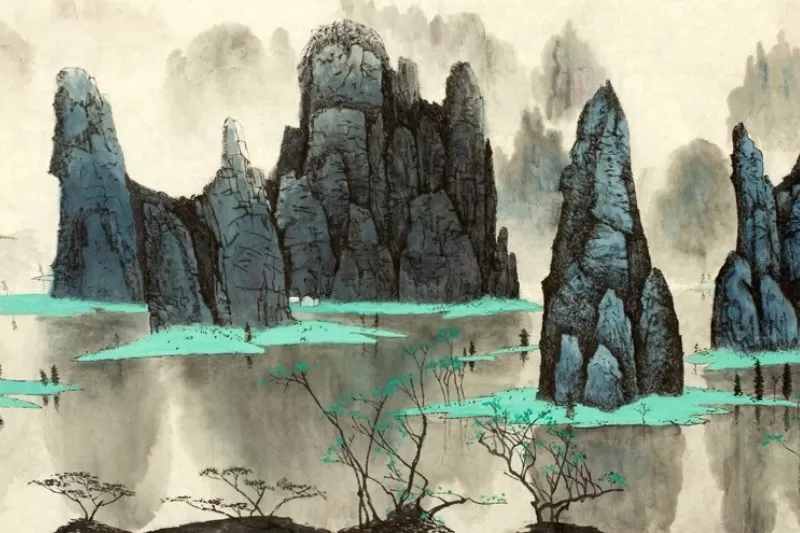 Chinese landscape
The Pain of Parting: Famous Chinese Farewell Poems
Farewell poems hold a special place in Chinese literature, capturing the bittersweet emotions of separation and the enduring bonds of friendship.
送杜少府之任蜀州 (Farewell To Vice-Prefect Du Setting Out For His Official Post In Shu) by Wang Bo
城阙辅三秦,
风烟望五津。
与君离别意,
同是宦游人。
海内存知己,
天涯若比邻。
无为在岐路,
儿女共沾巾。
TRANSLATION
By the walls surrounding the three Qin districts,
Through mist and smoke, I gaze towards the five rivers.
Sharing this feeling of parting with you,
We are both officials traveling far from home.
While we have friends within the four seas,
Even the farthest corners feel close.
There’s no need to linger at the crossroads,
Wiping tears like children.
Wang Bo’s poem transcends the sadness of parting, emphasizing the enduring power of friendship that knows no distance.
送友人 (Farewell to A Friend) by Li Bai
青山橫北郭, 白水遶東城
此地一為別, 孤蓬萬里征
浮雲遊子意, 落日故人情
揮手自茲去, 蕭簫斑馬鳴
TRANSLATION
Green mountains skirt the northern border,
White waters wind around the eastern town.
Here we part,
And you embark on a journey of ten thousand miles.
Like floating clouds, your wandering spirit soars,
Like the setting sun, my affection for you remains.
Waving goodbye,
We hear the mournful neighing of our horses.
Li Bai’s evocative imagery, comparing his friend’s wanderlust to floating clouds and his own affection to a setting sun, creates a poignant farewell scene.
Expressions of the Heart: Famous Chinese Love Poems
Love, a universal theme, finds eloquent expression in Chinese poetry, ranging from passionate declarations to subtle expressions of longing.
江城子 (Song of River City) by Su Shi
十年生死两茫茫,不思量,自难忘。
千里孤坟,无处话凄凉。
纵使相逢应不识,尘满面,鬓如霜。
夜来幽梦忽还乡,小轩窗,正梳妆。
相顾无言,惟有泪千行。
料得年年肠断处,明月夜,短松冈。
TRANSLATION
Ten years, life and death, a vast expanse.
I don’t try to remember, yet forgetting is hard.
A thousand miles to your lonely grave, nowhere to speak of my desolation.
Even if we met, you wouldn’t recognize me, my face covered in dust, my temples frosted.
Last night, in a dream, I suddenly returned home.
By the small window, you were combing your hair, applying makeup.
We gazed at each other, speechless, only tears streaming down.
Every year, where my heart breaks, is the moonlit night, by the short pine ridge.
Su Shi’s poignant poem, written in memory of his deceased wife, is a testament to the enduring power of love and loss.
 Chinese farewell poems – woman gazing out at lonely landscape
 Chinese poems about love – lonely painting of someone rowing their boat
This exploration of famous Chinese poems offers just a glimpse into the rich tapestry of Chinese literature. From the simple elegance of childhood verses to the passionate outpourings of love and the bittersweet pangs of farewell, these poems resonate across time and cultures, inviting us to connect with the human experience through the beauty of language.