
Often seen standing guard at the entrances of buildings, Foo Dogs are iconic figures in Chinese culture and Feng Shui. Despite their common English name, these powerful symbols are not dogs at all, but stylized representations of lions. They are much more than mere decorative elements; they are imbued with rich history, deep symbolism, and protective energy. Understanding what does foo dog represent reveals layers of meaning tied to protection, status, prosperity, and cosmic balance.
Contents
Historically, authentic lions were not native to China but were introduced through trade routes like the Silk Road. Their image quickly captured the imagination, particularly within the Buddhist tradition, where the Buddha’s teachings were likened to the powerful roar of a lion. This association with power, wisdom, and the ability to silence falsehoods laid the groundwork for the guardian lion’s symbolic significance.
The Evolution of the Guardian Lion’s Image
Over centuries, the depiction of these lions evolved artistically. Early forms were slender and somewhat rigid, while later dynasties like the Qi saw them become rounder, more muscular, and featuring the distinctive spiral patterns on their manes and bodies that are characteristic of the Foo Dogs we recognize today. This stylistic evolution reflects changing artistic sensibilities but maintains the core essence of strength and guardianship.
Initially, due to the cost of materials and skilled craftsmanship, these statues were exclusively found guarding imperial palaces, government offices, temples, and the homes of the elite. Consequently, they became powerful symbols of status and authority, signifying the wealth and prestige of those they protected.
 Foo Dogs – Chinese Feng Shui Protection Symbols
The widespread adoption of the term “Foo Dog” in the West, possibly originating from the Japanese term “Komainu” (Korean Dog) introduced via Korea, further blurred the lines between lion and canine. While their appearance might sometimes resemble Chinese dog breeds like the Chow Chow or Shih Tzu, their origins and symbolic power are firmly rooted in the majestic and formidable lion.
The Duality of the Pair: Yin and Yang
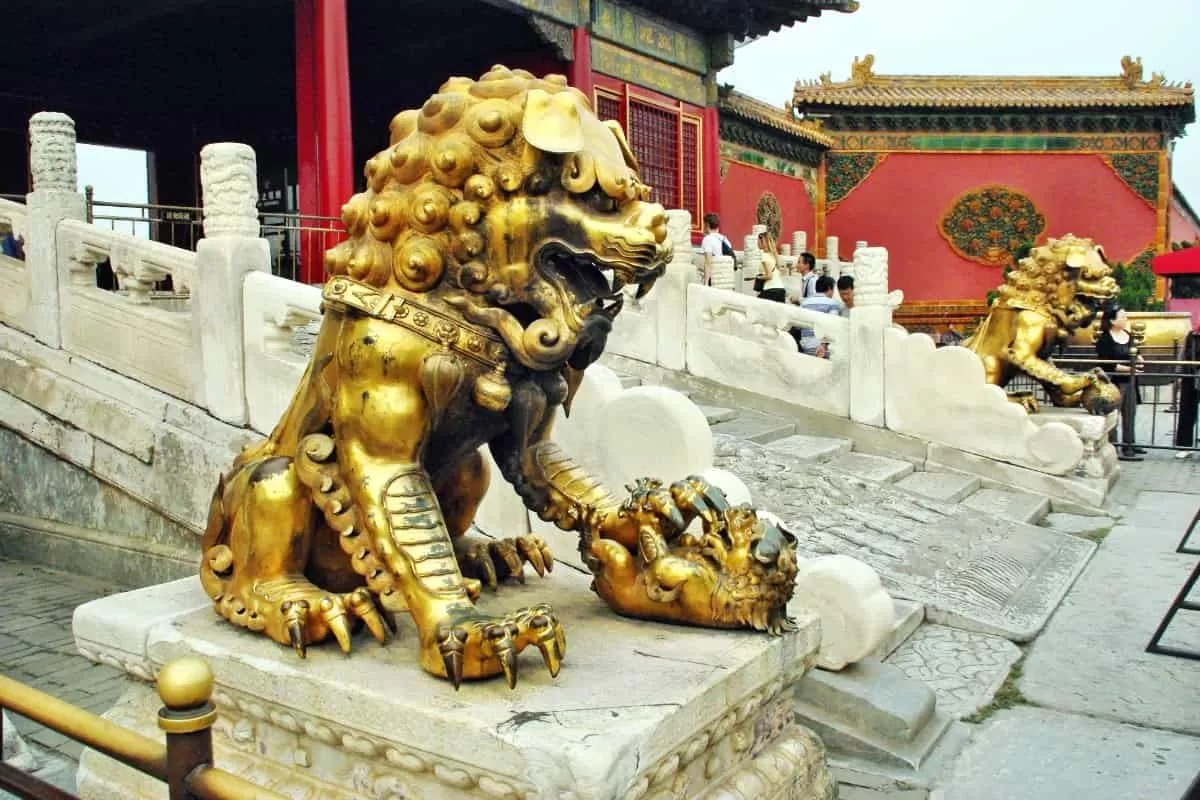
Foo Dogs are almost always displayed in pairs, a fundamental aspect of their symbolism representing the balance of yin and yang. This duality is crucial to their protective function. Each pair consists of a male and a female guardian lion, identifiable by what is beneath their paws when placed correctly.
The male lion, representing yang energy, typically rests his paw on an embroidered ball. This ball is often interpreted as representing the world, the cosmos, or unity, signifying his role in guarding the physical structure and universal energy.
poems for my true love
The female lion, embodying yin energy, is usually depicted with her paw on a playful cub. This symbolizes the nurturing aspect, the cycle of life, and her primary role in protecting the inhabitants of the home or building. Together, the male and female balance each other, providing comprehensive protection for both the physical space and the life within it.
 Female Chinese guardian lion with whirled mane in front of large doorway
Another symbolic feature is the lion’s mouth. Often, one lion in the pair has an open mouth, as if roaring to ward off evil spirits, while the other has a closed mouth, keeping good energy in. When interpreted together, the open and closed mouths can represent the sacred sound “om,” a significant mantra in various Eastern religions. The number of curls on their heads could also signify rank, particularly for those guarding official residences, adding another layer to what the foo dog represents in terms of social order.
Placement and Feng Shui: Maximizing Protective Energy
In Feng Shui, the placement of Foo Dogs is critical to harnessing their protective energy effectively. They should always be placed facing outwards, typically on either side of an entranceway, looking away from the door towards potential external threats.
When viewing the entrance from the inside looking out, the male lion (with the ball) should be placed on the right side of the doorway (the male, or Dragon side), and the female lion (with the cub) should be placed on the left side (the female, or Tiger side). This traditional positioning ensures the correct balance of yin and yang energy is guarding the entrance. Even smaller statuettes or bookends placed within a room should maintain this relative positioning.
 Feng Shui – Foo Dogs Positioning
Beyond the front door, larger statues might guard property entrances along driveways or sidewalks, or be placed at the approach to significant garden features like moon bridges, which symbolize a transition to nature or paradise. Their presence reinforces the protective and sacred ambiance of the space.
The Significance of Color and Direction
In the intricate system of Feng Shui, color and direction play significant roles in amplifying symbolic meaning and energy flow. The color of Foo Dogs can be chosen based on the direction the entrance faces, aligning with the Five Elements (Wu Xing) cosmology. For example, white, gold, or silver Foo Dogs are associated with the West and Northwest directions, linked to Metal energy, creativity, children, mentors, and travel. Red, associated with the South, relates to Fire energy, fame, and recognition.
For smaller indoor placements, the Bagua map, which relates areas of a space to different aspects of life (wealth, career, relationships, etc.), can guide color choices based on the section of the room where the Foo Dogs are placed relative to the room’s entrance. This level of detail underscores the sophisticated system behind Feng Shui principles and what the foo dog represents within it.
short love poems for her why i love you
Part of a Celestial Trio
The significance of Foo Dogs extends further as they are considered one of the Three Celestial Guardians in Chinese cosmology. These divine creatures are believed to suppress negative energy and combat the “Sarm Saat,” or three killings, which represent different forms of misfortune.
 Three Celestial Guardians – Foo Dog, Chin Lin & Pi Xiu
The trio consists of:
- Foo Dog: Guarding against evil spirits and protecting internal and external spaces.
- Chi Lin (or Qi Lin): A mythical creature combining aspects of various animals, symbolizing success, wealth, wisdom, and longevity.
- Pi Xiu (or Pi Yao): Another powerful hybrid creature known for attracting wealth and guarding against financial loss or harm to its owner.
These guardians are believed to influence “Ren” (Man) luck, one part of the cosmic luck trinity known as Tien Di Ren (Heaven, Earth, Man). While Heaven luck is destiny and Earth luck is influenced by environment (Feng Shui), Ren luck is shaped by our actions, behavior, and choices. The Celestial Guardians offer support in navigating the challenges that affect Ren luck. Utilizing all three guardians is believed to eradicate the negative effects of the Sarm Saat, highlighting the comprehensive protective system they represent.
loving you love poems
 Foo Dogs – Chinese Feng Shui – Tien-Di-Ren
Beyond Symbolism: A Presence in Modern Life
Today, Foo Dogs are found not only in traditional settings like temples and historical buildings but also in homes and businesses worldwide, adapted into various forms from large statues to small decorative items like bookends. Their presence signifies a respect for tradition, a desire for protection, and an appreciation for their aesthetic appeal. The continued popularity of the Foo Dog, whether strictly adhered to Feng Shui principles or used simply as a cultural accent, speaks to the enduring power of what this mythical creature represents: guardianship, prosperity, and the rich tapestry of Chinese symbolism. Even contemporary businesses recognize the potential value of incorporating such symbols to create an atmosphere of hospitality and security.
amusing love poems
 Foo Dogs Bookends
Whether viewed as ancient protectors or modern decorative statements, the question “what does foo dog represent” yields a complex answer encompassing layers of history, mythology, and cultural significance. They are fierce yet benevolent guardians, symbols of status and balance, and integral figures in the pursuit of good fortune and protection against negative forces. Their enduring presence serves as a reminder of the deep connection between symbolism, environment, and the human desire for security and prosperity.
depressing poems about death
 Black metal fu dog statues on pedestals in front of a red soribashi bridge
 Colored Foo Dogs