
The vast expanse of the ocean, the disciplined life of service, and the complex machinery of naval vessels have long provided rich ground for creative expression. While many poets outside the service have written “poems about the navy,” capturing the romance, danger, and duty of life at sea, the U.S. Navy itself harbors a lesser-known, fascinating poetic tradition: the New Year’s mid-watch deck log entry. This unique custom offers a glimpse into the sailor’s own voice, blending the strict requirements of official record-keeping with unexpected moments of verse.
Contents
The Structured World of the Navy Deck Log: A Foundation for Verse
A deck log is a meticulously kept record, mandated by Navy regulations, chronicling a ship’s daily activities. Maintained by the Quartermaster of the Watch and reviewed by the Officer of the Deck, it serves as a critical official record. Its purpose is strictly factual and administrative, documenting locations, movements, significant events, status of the ship’s systems, and personnel changes. The U.S. Navy History and Heritage Command emphasizes its nature as “efficient and succinct… and certainly not a forum for creativity.”
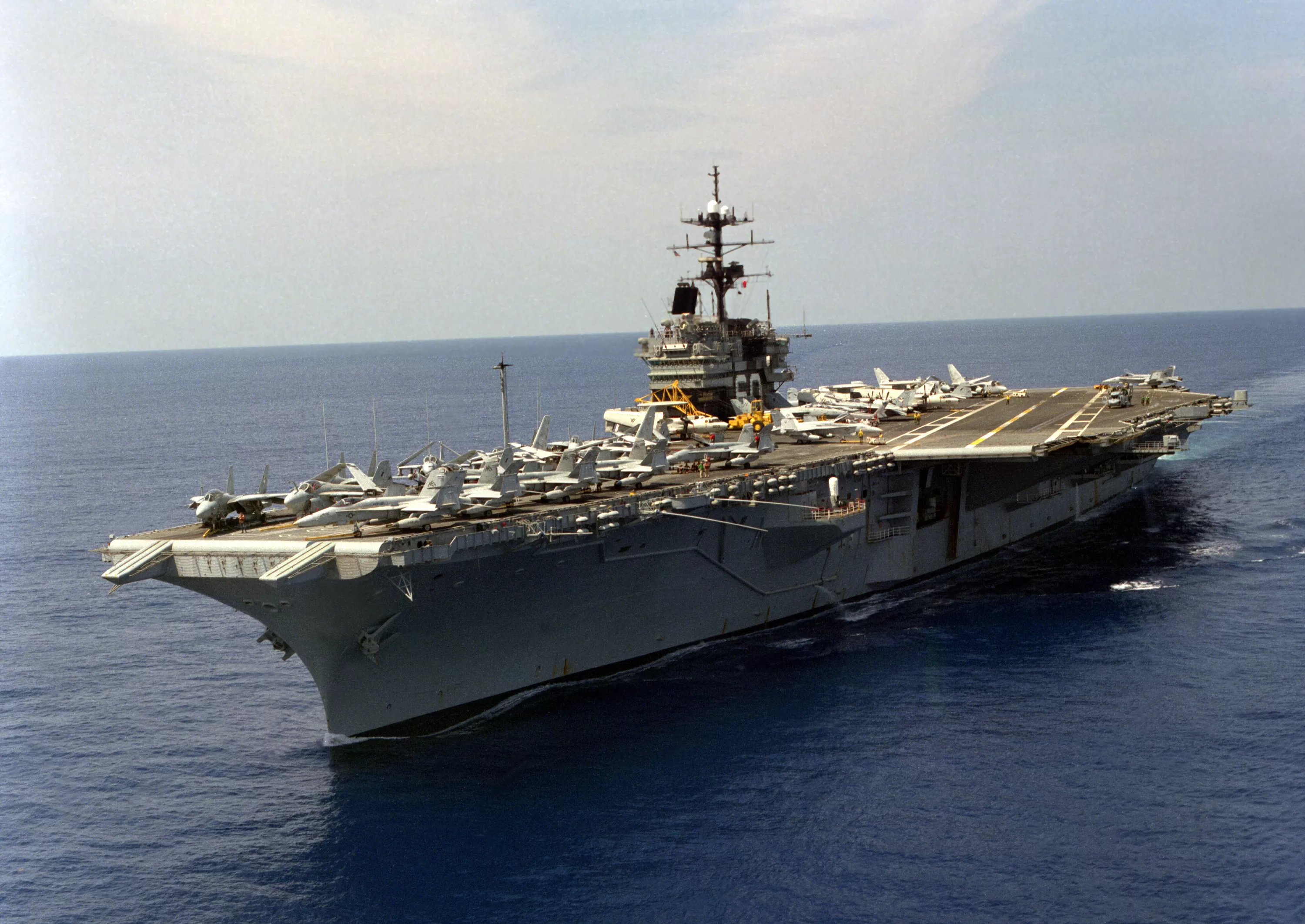 Port bow view of the aircraft carrier USS Saratoga (CV-60) at sea, a large US Navy ship
This strict format makes the occasional foray into poetry all the more remarkable. Archivists at the National Archives have been involved in digitizing millions of U.S. Navy and Coast Guard deck logs from the Vietnam era, primarily to support veterans’ disability claims. These records, while mostly factual, occasionally reveal the surprising practice of poetic entries.
The Exception: New Year’s Mid-Watch Poetry
The sole deviation from the rigid structure occurs during the first mid-watch of the New Year (midnight to 0400). During this four-hour period, ships were sometimes permitted to record the first log entry of the year in verse. While allowing artistic license, this tradition still demanded the inclusion of all mandatory information required by Navy regulations for the log: sources of power, sea and weather conditions, ship’s position, status of engineering, course and speed, sightings, personnel changes, and even anchor chain strain or line placement when moored.
This practice appears to have emerged in the 20th century, potentially peaking in popularity during the Vietnam War era. The Navy Times even reportedly held a contest for the best New Year’s Eve log poem. However, like many traditions, its prevalence has waned, with reports showing a significant decline in poetic entries in recent years.
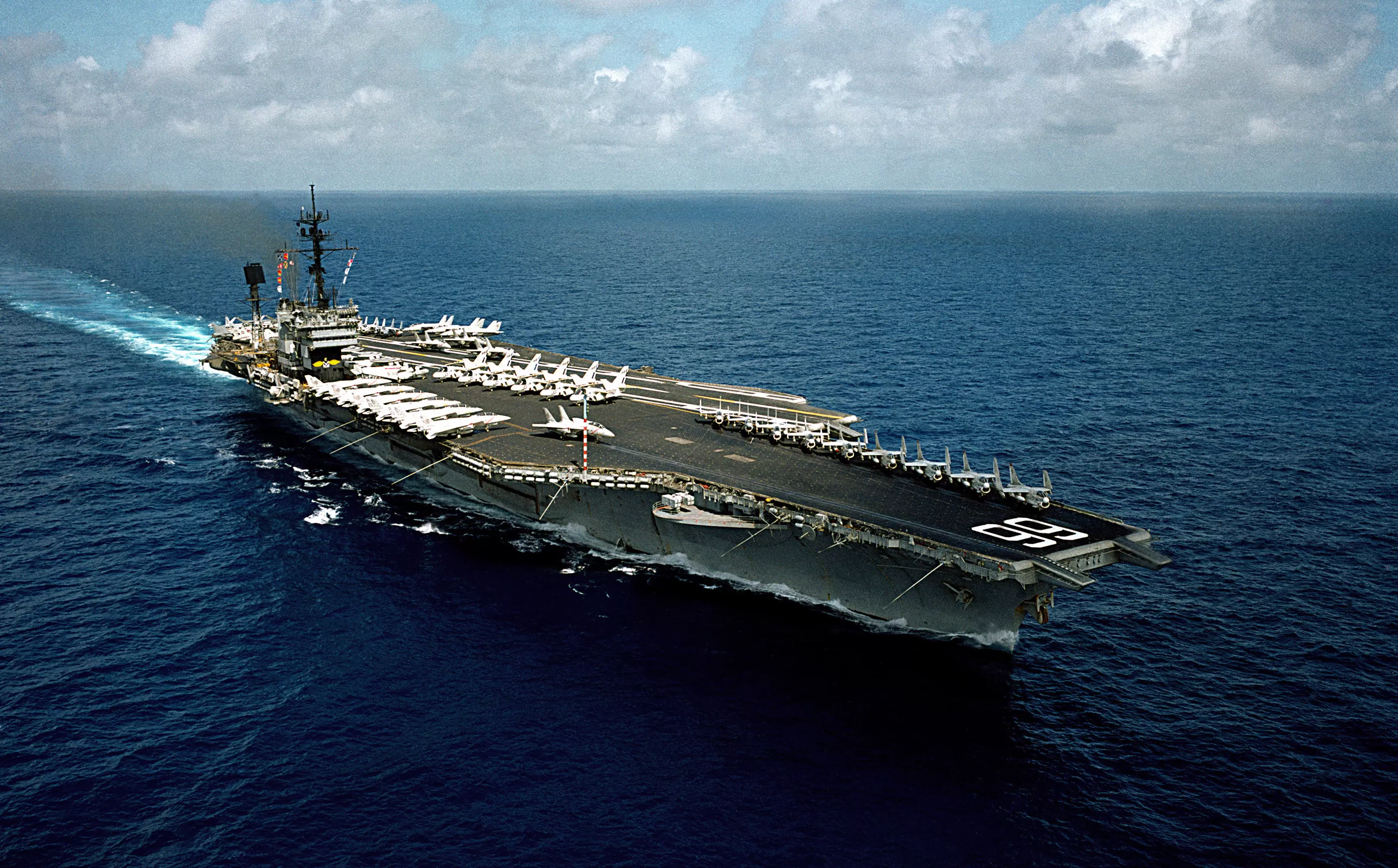 Aerial starboard bow view of the aircraft carrier USS America (CV-66) steaming through calm waters
Verses from the USS America: Capturing Life at Sea
The Kitty Hawk-class aircraft carrier USS America (CVA-66), commissioned in 1965, provides notable examples of this tradition. Her deck logs, preserved at the National Archives and undergoing digitization, include several instances of New Year’s log poems from her years of service, including deployments during the Vietnam War.
1966: Greetings from Livorno, Italy
The New Year’s log from January 1, 1966, finds America anchored in Livorno, Italy, during her first Mediterranean deployment. The poem personifies the “new year” arriving and being welcomed aboard, while diligently reporting the ship’s vital statistics within the verse:
A visitor boardingnew from the East!To the OOP a reportis due at least.
“Reporting for dutyand full of good cheer,Permission to board sir,for I’m the new year.”
“Permission granted,and welcome to the crew.But be assured, friend,your name is not new.
“For 66 here,with numbers of goldHas had a head start –almost a year old.
She’s taut and she’s bold;her performance is true.Her record stands outabove quite a few.
“From Commissioning thru Shake Downon into the Fleet,She’s sailed and she’s flowna record to meet.
In service of country, far from home this night,She stands a mighty vanguardin the half-moon’s shimmering light.
“In 10 fathoms of waterat anchorage XRay-3America is anchoredat Liverno, Italy.
With 90 fathomsof chain to her bowShe’s anchored – secure from the Northwind’s howl
“The Liverno light at 028.8°shines its silent goriaAnd America lies 293°from Torre Della Meloria.
“The quartermaster is recording the lore.Her reading tonightis condition Four.
“The Marines are on guard,that you may betAnd the engineers provideus with condition Yoke set.
“In Liverno tonightyour eyes will meetVarious units of theU.S. Sixth Fleet
“Naturally SOPA haschosen the best.Rear Admiral COBB, CCDII,makes America his nest.
“Under the keen eyeof Polaris to the northHer lights thier [sic] good willare sending forth.
“Her reputation withhard work was won,For being 66means being number one.
“I’m proud to be aboardthis brave and true ship.”Our visitor impressed,he replied with a tip.
“I offer you hope –as the spirit of peace.Together we’ll sailfrom Naples to Greece.
“By joining our missionsof peace and of strength,We’ll make this a yearwith happiness in length!”
With all best wishes for the year of the “66”!
This entry showcases the unique challenge of incorporating precise nautical data (depth, chain length, bearings, conditions) into a narrative poem, reflecting the location and operational status of the ship at the moment the new year began.
1973: Anchored in Hong Kong Harbor
Seven years later, after multiple deployments including service in Vietnam, the USS America was anchored in Hong Kong Harbor on New Year’s Day, 1973. The log entry again takes poetic form, listing the ship’s position, depth, anchor chain, and readiness conditions:
Anchored in Hong Kong Harbor, Hong Kong, B.C.C.Eight fathoms of water, mud bottom below us, weLayed forty-eight fathoms of chain from the waters edgeTo the bow anchor beneath the sea.
This anchor bearing holds true tonightIt’s 324, 3000 yards to Stone Cutter’s Light.With the ship in readiness Condition IV, we’ve pledged,To set material condition Yoke and the following sights:
Normal lighting is in effect and anchor lights too,Plus aircraft warning, to name just a few;With Comcardin Seven, as SOPA, embarked aboard ship,The officers are safe, and so is the crew.
This shorter entry demonstrates the continuation of the tradition, prioritizing the required facts while maintaining a rhyming structure. It captures the specific, grounded reality of being a large naval vessel at anchor in a foreign port.
The Blend of Duty and Diction: What These Naval Poems Reveal
These deck log poems are fascinating examples of “poems about the navy” from the perspective of those living the experience. They are not traditional literary works meant for broad publication, but functional documents infused with moments of creative expression. They reveal the unique challenge of merging the strict factual demands of naval record-keeping with the impulse to mark a significant moment poetically.
Within their lines, we find not just the required data points, but also glimpses of pride in the ship (“being 66 means being number one”), the context of deployment (“far from home this night”), and the mundane details of life at sea (mentioning Marines on guard, engineers, officers, and crew). While perhaps not masterpieces of poetic form, they are genuine artifacts of naval culture, demonstrating how even within the rigid hierarchy and operational demands of the Navy, there was space, at least once a year, for a touch of verse. They stand as a unique subset of “poems about the navy,” documenting history and routine through an unexpected lyrical lens.
Conclusion
The tradition of the New Year’s deck log poem is a charming and insightful example of how poetry can surface in the most unexpected places, even within the official records of military service. These “poems about the navy,” created by sailors themselves, blend factual reporting with creative spirit, offering a distinctive historical and literary perspective on life aboard a naval vessel at the turn of the year. They remind us that the impulse to capture experience in verse is a deeply human one, persisting even amidst the strict discipline of the sea.