
The ethereal dance of the Northern Lights, or Aurora Borealis, has captivated human imagination for millennia. These shimmering curtains of green, pink, and red light painting the polar skies are not only a breathtaking natural phenomenon but also a profound muse for artists and poets alike. While mentions can be elusive, tracing the aurora through verse reveals how this celestial spectacle has been woven into the fabric of human experience, myth, and contemplation. Exploring poems about the northern lights uncovers layers of wonder, mystery, and emotional resonance.
For those living or traveling in northern latitudes, the hope of witnessing the aurora is a powerful draw. This anticipation mirrors the way poets have looked to the sky, seeking meaning and beauty in its ephemeral glow. From ancient myths explaining their origin to modern reflections on their beauty and symbolism, the Northern Lights have consistently inspired verse that attempts to capture their fleeting magic.
Walt Whitman, the great American transcendentalist, saw the vastness of the cosmos reflected in natural wonders. In his 1880 poem, ‘A Riddle Song,’ he touches upon the aurora, placing it alongside other sublime natural sights:
Rich as a sunset on the Norway coast, the sky,the islands, and the cliffs,
Or midnight’s silent glowing northern lights unreachable.
Here, Whitman contrasts the fiery drama of a sunset with the silent, unattainable glow of the aurora, presenting it as a distant, almost mystical spectacle. The word “unreachable” emphasizes its otherworldly quality, separate from the tangible beauty of coastlines. This brief mention highlights the aurora’s power to evoke awe and a sense of the infinite, fitting themes for Whitman’s expansive verse.
Across the Atlantic, in a different context entirely, Scottish poet Violet Jacob included the aurora in her 1918 poem, ‘To AHJ’. Written during World War I, the poem evokes the landscape of home in Angus, Scotland, providing a poignant counterpoint to the distant battlefields where her son Harry died. Amidst the familiar imagery of the Scottish autumn nights, the aurora appears:
On Angus, in the autumn nights,
The ice-green light shall lie,
Beyond the trees the Northern Lights
Slant on the belts of sky.
Jacob’s description captures the characteristic “ice-green light” and the way the aurora can appear to “slant” across the horizon. In the context of loss and separation, the enduring presence of the natural landscape, including the Northern Lights, becomes a quiet testament to home and memory, contrasting the stillness of the sky with the turmoil of war.
The ancient world had its own ways of understanding celestial phenomena. In Homer’s epic, The Odyssey, the dawn goddess Eos rides across the sky each morning. Later Roman adaptations and translations, like Alexander Pope’s 1726 version, often used the Roman counterpart, Aurora, whose name eventually contributed to the scientific term for the Northern Lights:
But when, from dewy shade emerging bright,
Aurora streaks the sky with orient light
While this specifically refers to the dawn, the association of “Aurora” with a luminous, streaking sky paved the way for Galileo Galilei centuries later to combine her name with Borealis (from the Greek Boreas, the north wind) to scientifically name the northern phenomenon. This linguistic connection underscores the deep historical link between celestial light, mythology, and the human attempt to name and understand the wonders above. This connection is different from a reindeer poem which draws on fauna of the region.
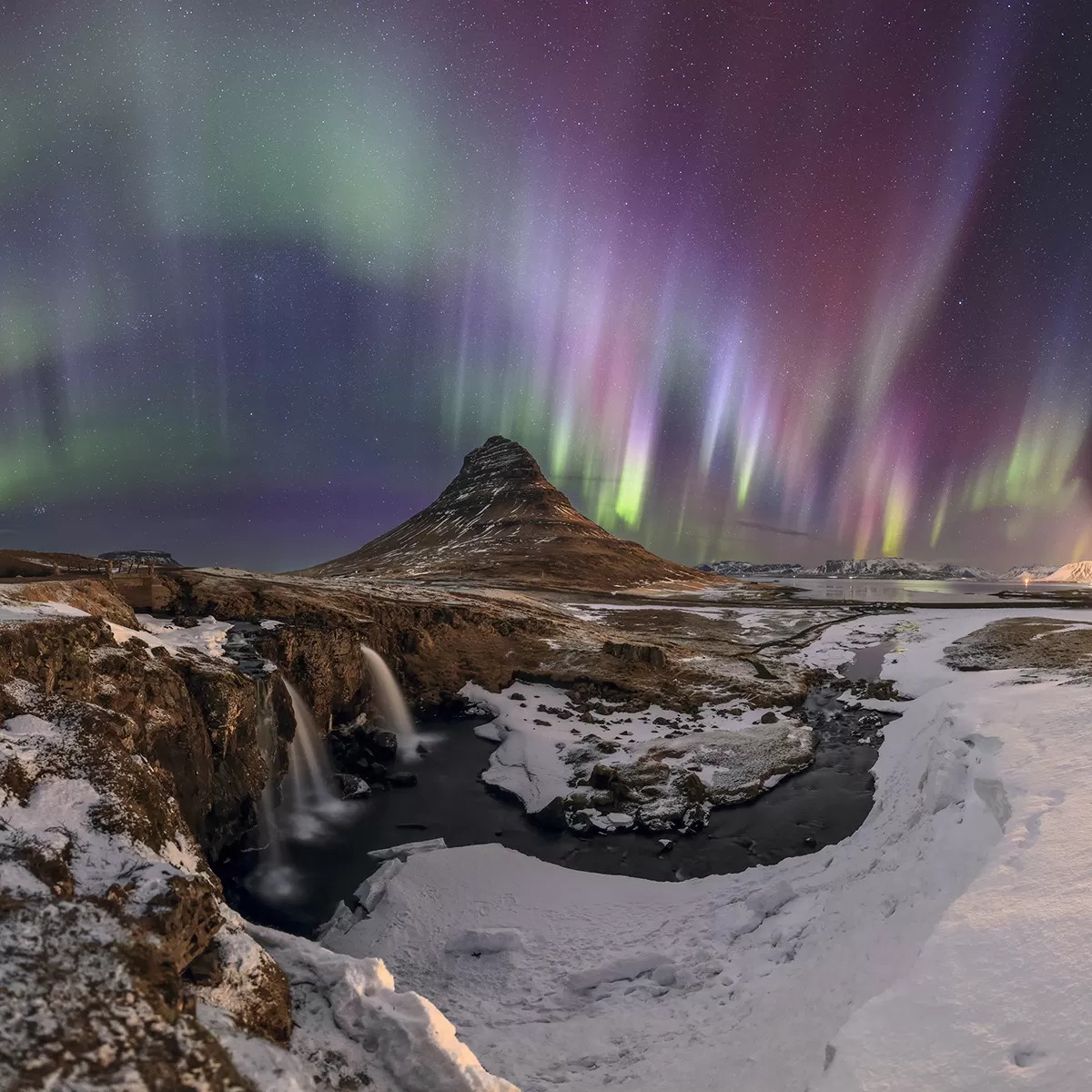 Vibrant northern lights over a dark landscape in Iceland with visible stars.
Beyond classical references, various cultures have their own rich folklore and names for the Northern Lights, many finding their way into oral tradition and written works. In Old Norse mythology, the most vibrant aurora was sometimes identified with Bifrost, the burning rainbow bridge connecting Earth (Midgard) to the realm of the gods (Asgard). Snorri Sturluson’s medieval text, The Prose Edda, describes this bridge:
The gods made a bridge from earth to heaven, which is called Bifrost? You must have seen it. It may be that you call it the rainbow. It has three colors
While often interpreted as a rainbow, the description of a shimmering, multi-colored bridge to the heavens resonates strongly with the appearance and mystical nature of the aurora. This mythological interpretation highlights the awe and divine significance attributed to the lights in ancient Norse beliefs.
In northern Scotland, the lights are often called the Mirrie Dancers, or in Scottish Gaelic, Na Fir-Chlis, meaning ‘the nimble men.’ This name inspired a 1909 poem by Donald Mackenzie, born in Cromarty, a place renowned for its northern views. Mackenzie’s poem incorporates the local folklore, imagining the lights as a dance of supernatural figures.
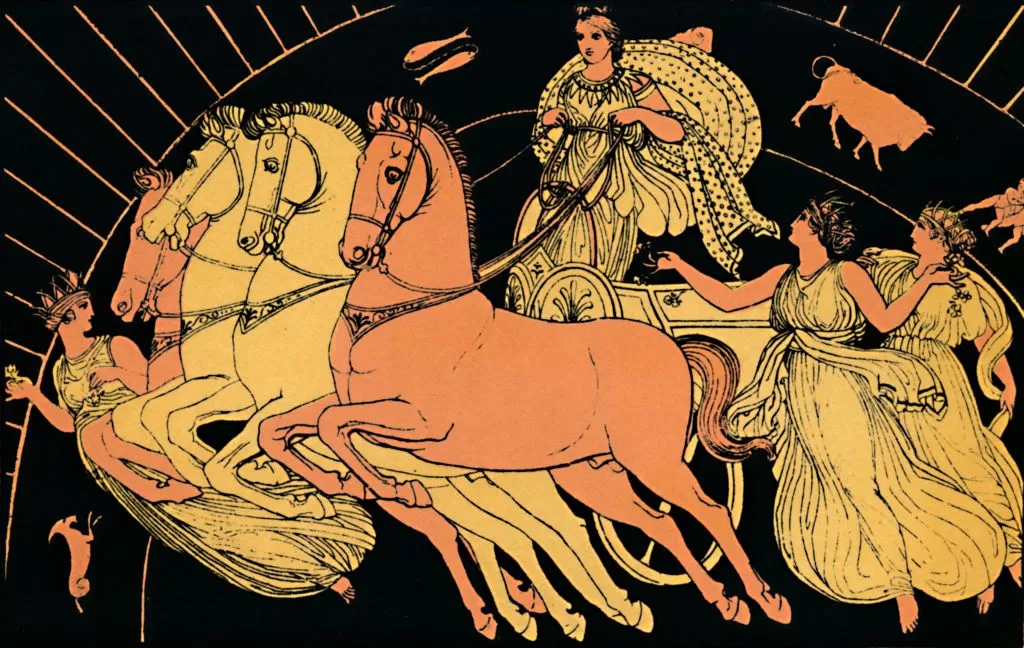 Mythological depiction of the goddess of dawn, Eos/Aurora, riding horses across the sky in 'The Horses of the Morning' by Briton Rivière.
These diverse examples, from Whitman’s philosophical musing to Scottish folklore captured in verse, demonstrate the varied ways poets have approached the Northern Lights. Whether seen as unattainable beauty, a quiet part of a familiar landscape, a mythological bridge, or dancing spirits, the aurora continues to ignite the poetic impulse, encouraging us to look up and ponder the mysteries of the universe. Unlike the narrative structure of the ballad of Mulan, these poetic mentions tend to capture fleeting moments or connect the lights to broader themes of nature, memory, or myth.
The search for poems about the Northern Lights reveals a rich tapestry of human response to this celestial phenomenon. Each mention, whether brief or central to a piece, adds to the collective literary legacy inspired by the aurora’s silent, luminous performance across the northern sky. They remind us that poetry thrives not just in grand narratives, but in the subtle, breathtaking moments when the natural world intersects with our deepest feelings and oldest stories.
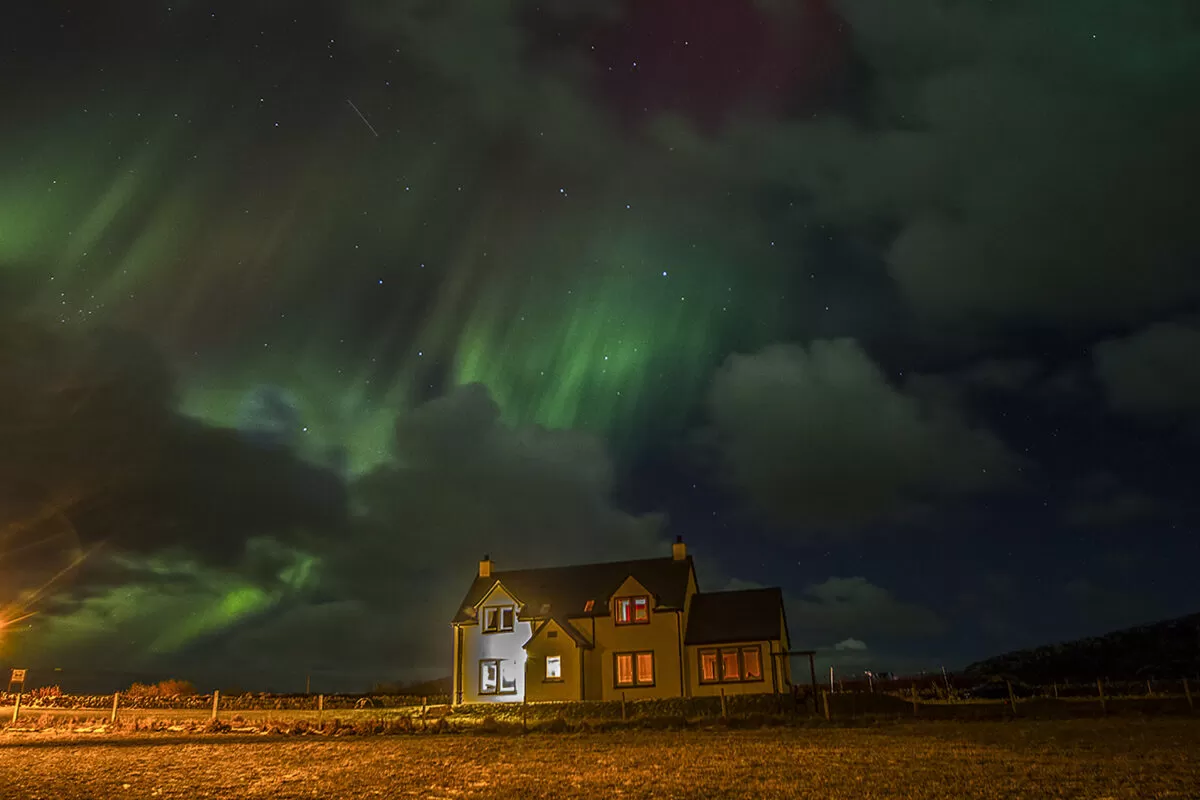 Green northern lights glowing above a rocky landscape near Durness in Scotland under a dark sky.
Ultimately, these poetic encounters with the aurora, from different eras and cultures, underscore the enduring power of the Northern Lights to inspire wonder and contemplation. They invite readers to not only appreciate the scientific spectacle but also to connect with the deep emotional and cultural resonance this luminous display has held throughout history.