
William Wordsworth stands as a colossal figure in English literature, fundamentally changing the course of poetry. As a key wordsworth poet of the Romantic era, his revolutionary approach, outlined most famously in the preface to the second edition of Lyrical Ballads (1800), sought to bring poetry back to “incidents and situations from common life” and to employ “a selection of language really used by men.” This emphasis on ordinary experience and accessible language was a radical departure from the more formal, elevated style prevalent in much 18th-century verse, making poetry more democratic and emotionally resonant for a wider audience.
Wordsworth’s early life was deeply rooted in the landscapes of the Lake District in northern England. Born in Cockermouth in 1770, he spent much of his boyhood exploring the natural world that would become the central theme and inspiration for so much of his work. This immersive experience in the mountains, valleys, and lakes “Foster’d alike by beauty and by fear,” as he later wrote in his autobiographical masterpiece, The Prelude. This intimate connection with nature was not merely observational; it was a formative spiritual and emotional relationship that convinced him, as he expressed in “Lines Composed a Few Miles Above Tintern Abbey,” that “Nature never did betray / The heart that loved her.” This profound belief in nature’s power to nurture, console, and teach would become a cornerstone of his poetic philosophy.
His university years at St. John’s College, Cambridge, felt somewhat restrictive compared to the freedom of his Lake District youth. However, a walking tour through revolutionary France in 1790 ignited a fervent republican sympathy and exposed him to the turbulent forces of social and political change. A subsequent return to France led to a passionate relationship with Annette Vallon and the birth of their daughter, Caroline. Cut off from them by war, the period following his return to England was marked by personal struggle and political disillusionment. Living in London among radicals, he developed a deep empathy for society’s marginalized – the poor, the displaced, the victims of war – figures who would populate his poems, highlighting his commitment to depicting the realities of human life beyond the aristocratic or mythological subjects common in poetry before him. His writing began to reflect these somber themes, exploring the quiet suffering and resilience he observed, perhaps mirroring the sentiment one might feel when faced with life’s inevitable struggles, a theme echoed poetically in phrases like don’t go peacefully into the night.
The transformative period for Wordsworth’s poetic career began in 1795 with his reunion with his beloved sister Dorothy. Their shared life and walks, especially after moving to Alfoxden House near Bristol in 1797, reignited his creative spirit. More significantly, this move brought him into close contact with Samuel Taylor Coleridge, initiating one of the most important literary partnerships in English history. Their collaboration led to the publication of Lyrical Ballads in 1798, a volume that marked the official beginning of the English Romantic movement.
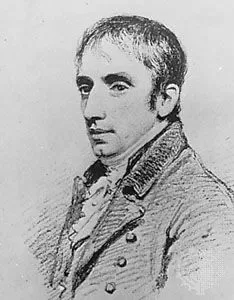 Portrait of William Wordsworth, the English Romantic poet, painted by Henry Edridge in 1804.
The project they undertook was deliberately experimental. Coleridge focused on supernatural subjects rendered believable, while Wordsworth aimed to endow everyday life and language with poetic dignity. As the dominant wordsworth poet in the collection, Wordsworth’s contributions illustrated the core principles that would revolutionize English poetry. His poems, such as “The Solitary Reaper,” “Resolution and Independence,” and the aforementioned “Tintern Abbey,” demonstrated the power of focusing on simple rural life and natural scenes to explore profound human emotions and philosophical insights. The famous preface to the 1800 edition articulated the theory behind this practice, asserting that poetry should be “the spontaneous overflow of powerful feelings: it takes its origin from emotion recollected in tranquility.” This emphasis on authentic emotion, derived from personal experience and filtered through contemplative memory, set a new standard for poetic authenticity.
Wordsworth’s major works, composed largely during the “great decade” of 1797–1808, solidified his reputation as a leading wordsworth poet. The Prelude, though published posthumously, is perhaps his most significant achievement, a vast autobiographical exploration of “the growth of a poet’s mind,” detailing the influences that shaped his consciousness and creative spirit, particularly the interaction between mind and nature. Other notable works like the “Ode: Intimations of Immortality from Recollections of Early Childhood” explore themes of memory, childhood innocence, and the loss of a primal connection to the divine, showcasing his ability to blend philosophical inquiry with deep personal feeling. His poems often celebrate the quiet moments of life and the inner world of individuals, even those considered humble. Discussions of such intimate themes can sometimes bring to mind various forms of poetic expression, from reflections on profound bonds to lighthearted verses such as cute couple poetry, illustrating the vast spectrum of human emotion captured in verse.
By championing the language of common speech and finding beauty and significance in everyday life and nature, Wordsworth expanded the scope of what poetry could be and who it could speak to. He explored universal themes of life, loss, memory, and the restorative power of the natural world with unprecedented sincerity and depth. While his later work sometimes drifted towards conservatism, his early contributions remain foundational to modern poetic sensibility. He demonstrated that profound insights and powerful emotions could be conveyed through simple diction and humble subjects, proving that the role of a wordsworth poet was not just to entertain or instruct according to classical rules, but to connect deeply with the human spirit through genuine feeling and observant reflection. His legacy endures, inviting readers to look anew at the world around them and the complex tapestry of inner life. Understanding his approach helps illuminate the evolution of poetic thought and encourages a deeper appreciation for the emotional and intellectual journey a poem can offer, perhaps even inspiring lines that, while different in theme, share a similar intensity, like don’t go quietly into the night quote. His influence on subsequent generations of poets is immeasurable, solidifying his place not just as a prominent figure, but as a defining voice in the history of poetry.