
The ubiquitous advertising for Shen Yun Performing Arts often appears suddenly, settling into public consciousness like a familiar jingle or an unexplained phenomenon. Across cities hosting the annual tour, viewers encounter a consistent, often baffling image: a figure soaring against a vibrant, usually lilac or gold backdrop, accompanied by phrases like “5,000 Years of Civilization Reborn” or “Experience a Divine Culture.” For many, these ads are a pervasive, almost uncanny presence, suggesting a significant, yet mysterious, entity.
This widespread advertising blitz isn’t accidental. It’s a carefully coordinated campaign that makes “Shen Yun Ads” feel like a distinct season on the cultural calendar. The sheer volume and consistency across diverse locations raise questions about the organization behind it and the message it intends to convey beyond traditional Chinese dance. This persistent, high-visibility marketing campaign has led many to ask: What exactly is Shen Yun, and is it a form of Chinese propaganda?
Initial impressions might suggest a purely cultural performance showcasing classical Chinese dance and music. The show itself features elaborate costumes, acrobatic feats, and an orchestra incorporating Chinese instruments. Digital backdrops display scenes of ancient temples, royal gardens, and celestial realms. However, beneath the surface of vibrant aesthetics and captivating choreography, the narrative threads woven through the performance reveal a specific and potent message.
The dances, often introduced by bilingual hosts, frequently depict stories with clear moral and political undertones. Titles like “Goodness in the Face of Evil” hint at allegorical narratives. A recurring theme is the persecution of practitioners of Falun Dafa (also known as Falun Gong) in contemporary China by the Chinese Communist Party (CCP). One particularly striking segment described in personal accounts depicts the imprisonment and organ harvesting of a young Falun Dafa follower by Communists.
Beyond the dance, the performance incorporates solo vocalists singing songs in Chinese with translated lyrics displayed on the backdrop. These lyrics often espouse specific beliefs associated with Falun Dafa, such as the idea of a divine Creator saving humanity, the rejection of atheism and evolution, and criticism of “modern trends” perceived as destructive to human nature. The inclusion of such overtly religious and political content within a performance marketed primarily as cultural entertainment fuels the perception that Shen Yun is not merely a dance show, but a vehicle for a particular message.
This brings us to the central question: Is Shen Yun Chinese propaganda? The answer is complex and depends on how one defines “Chinese propaganda.” Shen Yun is not propaganda disseminated by the government of the People’s Republic of China (PRC). In fact, the PRC actively seeks to suppress Shen Yun and Falun Dafa. The Chinese Embassy in the United States, for instance, explicitly warns people to “stay away” from the performance, labeling it as an effort by the “Falun Gong” organization to “deceive and use the cult.”
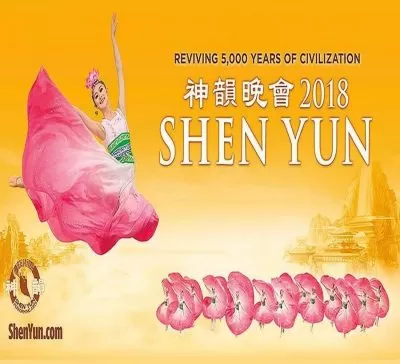 A goldenrod yellow poster featuring a female dancer in traditional Chinese attire with flowing sleeves. The text reads "Reviving 5,000 Years of Civilization".
Instead, Shen Yun Performing Arts was founded in 2006 by practitioners of Falun Dafa in New York. It is widely understood to be the artistic arm of this spiritual movement. Falun Dafa, a spiritual discipline combining meditation and qi gong exercises with moral philosophy centered on the principles of “truthfulness, compassion, and forbearance,” gained immense popularity in China in the 1990s. Its rapid growth and large following were eventually perceived as a threat by the CCP, leading to a severe crackdown in 1999. Since then, Falun Dafa has been banned and heavily persecuted in mainland China.
Shen Yun’s performances serve, in part, as a platform to raise awareness about this persecution and to promote the spiritual teachings of Falun Dafa. The show often includes dramatic depictions of the suffering faced by practitioners in China, contrasting the beauty of “traditional” Chinese culture (as interpreted by Shen Yun) with the alleged brutality and atheism of the Communist regime. A dance segment portraying a confrontation between Falun Dafa followers (often depicted in bright, traditional attire, holding religious texts) and corrupt youth (often in black, looking at phones, sometimes portraying same-sex couples) culminates in a dramatic scene involving symbols of Communism and destruction, including a visual representation interpreted by some viewers as a “tsunami with the face of Karl Marx.”
This overt messaging makes it clear that Shen Yun has a distinct political and religious agenda: to criticize the CCP and promote Falun Dafa. While it is not propaganda from the Chinese state, it functions as propaganda against the Chinese state, specifically from the perspective of the Falun Dafa movement. It aims to persuade audiences of the legitimacy and inherent goodness of Falun Dafa, the illegitimacy and evil of the CCP’s persecution, and the value of the spiritual beliefs espoused by the movement.
The extensive advertising, often presenting the show purely as a celebration of “5,000 years of Chinese culture,” can be seen as a way to attract a broad audience who might not otherwise be interested in or aware of Falun Dafa or its political struggles. Many attendees report being surprised by the explicit political and religious content, having been led by the advertising to expect a purely cultural or artistic performance.
The organization’s scale and resources also raise questions. Shen Yun is a non-profit with significant assets and revenue. Its six touring companies, each comprising dozens of dancers and musicians trained at a large Falun Dafa-affiliated academy in upstate New York, perform globally in prestigious venues. Reports indicate that the substantial advertising costs in various cities are often underwritten by local Falun Dafa associations, highlighting the deep connection between the performance troupe and the spiritual movement.
Beyond the anti-CCP stance, some criticisms have been leveled against certain beliefs attributed to Falun Dafa founder Li Hongzhi. These include reported views on evolution, race, and homosexuality, as well as claims about supernatural phenomena like “faluns” (energy-containing entities) and potential skepticism towards modern medicine in favor of spiritual healing. While Falun Dafa emphasizes core tenets of truthfulness, compassion, and forbearance, and practitioners highlight the positive impact on their health and well-being, critical accounts from former adherents or their family members sometimes raise concerns. For instance, one individual claimed his parents refused essential medical treatment due to the group’s teachings.
 A Shen Yun poster featuring two female dancers in colorful, flowing costumes (pink and yellow). The text reads "Absolutely the No. 1 show in the world".
The organization and its proponents are often highly protective against criticism or negative portrayals, sometimes reportedly threatening legal action or lodging complaints against media outlets or individuals who publish unfavorable accounts or delve into the controversies surrounding Falun Dafa and its leader’s teachings. This defensiveness, coupled with the discrepancy between the general marketing and the specific on-stage messaging, contributes to the perception of Shen Yun as an entity with a hidden agenda beyond mere cultural performance.
In conclusion, while Shen Yun is not propaganda disseminated by the government of China, it functions as a powerful vehicle for the political and religious messages of the Falun Dafa movement. Its performances are designed not only to showcase classical Chinese dance but also to inform audiences about the persecution of Falun Dafa in China and to implicitly or explicitly promote the group’s beliefs. The extensive and often content-neutral advertising serves to draw in a wide audience, making the on-stage messaging about anti-Communism and Falun Dafa central to understanding whether Shen Yun constitutes a form of advocacy or propaganda. For those attending, recognizing the organization’s ties to Falun Dafa and its overt messaging is key to interpreting the performance beyond its artistic elements.